Thursday, October 29, 2015

The Past Haunts us....Literally


                                                                     Hanna Bobrowicz, October 29th 2015

“Freeing yourself was one thing; claiming ownership of that freed self was another”-Toni Morrison
 
     
Why is it so hard to forgive ourselves? Do the events that happen in our past, dictate our internal desires and external actions?  


Toni Morrison's novel, Beloved, depicts characters grappling with trauma from a life spent in slavery. Their past literally haunts them and takes the form of a murdered child, Beloved. Beloved forces Sethe, and her companion Paul D to confront the past, which ultimately causes them to re-experience the agony they endured under slavery. The past, manifested as Beloved, consumes and determines the character’s overall desires for their future.
Beloved serves as an embodiment of the past, and begins to control the members of the family who live with her. Paul D has been subjected to relentless sexual trauma during slavery and stumbles upon 124 longing to feel a sense of peace and to put the past behind him. But this is impossible once Beloved begins living at 124.  Pamela E. Barnett, author of the essay, Figurations of Rape and the Supernatural in Beloved, identifies Beloved as being a sort of “female demon” and symbolizes the link between “haunting and rape”. Indeed Beloved does, in a sense, rape Paul D, but she is not a miscreant in the way Barnett describes her to be. She does not rape Paul D to spite him, as Barnett suggest, she does this to trigger more gruesome memories of the past. When Paul D sleeps with Beloved, she makes him recall the hideous events of sexual torture that he endured in the chain gang. Beloved forces him to recall memories locked up in his “tobacco tin” heart to “burst open” (138). Paul D’s tobacco tin is a shield from past horrors as it prevents Paul D from feeling the gravity of what he has experienced. Beloved breaks open his tin, and releases the “haunting and rape” that Barnett writes of. Paul D cannot escape her or the memories she invokes because he lives with her, nor can he stop the nightly visits. Paul D’s desire to forget the pain that is associated with slavery is impossible due to Beloved’s constant presence.  Barnett is correct when she says that Beloved “haunts’ the inhabitants of 124 because she is a reminder of the things they did in order to survive. She embodies their memories of slavery and torture. Many victims of trauma are unable to move on with their lives and Beloved is the literal representation of the trauma of slavery forever haunting Sethe and Paul D.
Unable to stifle his past in the presence of Beloved, Paul D’s intentions shift dramatically. Barnett suggests that Beloved is a “catalyst for Paul D’s recollection of the past”, this can be seen in Paul D’s increasing urge to flee as Beloved’s nightly visits turn into a habit. Paul D begins to move about the house, moving first to the living room, then Baby Sugg’s room, and finally, outside in a shed. He does this because Beloved forces him to remember the time he endured sexual abuse while in a chang gang. The only way Paul D escaped the mental and physical torture of the chain gang, was by running away, he moves around the house because he wants to escape from 124. He wants to escape from Beloved and the memories she brings to him. This is a significant shift from his initial desire to move in with Sethe and make a “good life”, before Beloved resurrected (55).
Beloved also serves as a “catalyst” for Sethe’s memories, but it grows into something that Barnett interprets as a “menacing force”. Memories hound Sethe of the torture she also endured in slavery, and the decision she made to end her daughter's life. Many years before, in a desperate and anguished act, Sethe killed the two-year-old baby, Beloved, so she would not have to experience the horrors of slavery. She believed death to be the lesser evil than life as a slave. But since the moment of her fatal decision, Sethe has been plagued with guilt wondering if Beloved would forgive her and understand why she did it. However Beloved voices her mother’s biggest fears by accusing Sethe of “leaving her behind” (284). Beloved taunts her mother with the same words and thoughts Sethe perhaps contemplated before deciding to kill her daughter. Sethe is not only traumatized by her experience as a slave but also the gruesome way she ended her daughter's life. The “menacing force” is not the pure evil that Barnett intends when using that phrase to describe Beloved; but of Beloved’s remorseless greed for more justifications. This forces Sethe to relive the day in which she made the impossible moral decision to kill her daughter. Sethe is not able to escape her past, so her intentions of having a peaceful and quiet life are abandoned as she focuses her attention on Beloved. Quitting her job, feeding Beloved robustly from a diminishing food supply, singing her lullabies and spending her life’s savings on new ribbons and clothes (282).These superfluous act are due to Sethe’s desperate craving for redemption, while her subconscious manifests in Beloved’s accusations. Slavery was the force that made Sethe kill Beloved, and continues to block any chance of a content and peaceful future.
Toni Morrison writes about the different levels of pain those escaping slavery had to endure. Sethe and Paul D's trauma of slavery caused them to live with the past always present in their mind. Even though they try to create normalcy, they are haunted by the pain of slavery. Beloved was a physical representation of the different types of trauma they experienced. Because she lived with them they could never move on from the heartache of slavery. In the beginning of the novel, Sethe and Paul D had hopes for a future together. But their desires changed dramatically once they were reminded of their pain. For Paul D this caused him to flee, just as he had on the chain gang. For Sethe, she was consumed with guilt making her unable to live a full life. Morrison writes personal story about the lives of Paul D and Sethe but also about the legacy slavery has on the world. Sethe and Paul are not able to move forward with their lives, until they fully face and resolve the things they did in order to survive. They need to forgive themselves for surviving something horrible even while so many others died.  For them, the past definitely determines their future.   


What More? Explore these links!
What I am Reading-The article I analyzed by Pamela E. Barnett!

Too Much Love Will Kill You: Critical Lens Experts

Agnes Nantista
29 October 2015

Toni Morrison’s Beloved is a complex interpretation of the legacy of slavery in the form of a novel; it delves into family life and the struggle of transitioning from slavery to freedom. One major theme in Beloved, shown through the main character’s development, is that when love is too strong, it becomes a self-enveloping, blinding force.
The main character, Sethe is an escaped slave who has endured a torturous life, and wishes to protect her children from being subjected to slavery at any means--even by taking their lives. The murder of baby Beloved, an act of extreme love for Beloved by Sethe in the face of her former owner, catalyzes the novel’s plot. Sethe is resolute in her decision to kill Beloved, while everyone else in her family, the townsfolk, and her owner are horrified by the odious act. Through this act, Sethe becomes isolated from her community--a situation she is apathetic towards--even though inclusion in community is crucial to Sethe’s retainment of sanity, as we observe later in the novel.
The significance of community--nuclear or larger--is highlighted in Philip Page’s analysis of Beloved: “Circularity in Toni Morrison’s Beloved,” in which he calls communities metaphoric circles that one joins or leaves. The motif of circles and circle metaphors is evident in Beloved as things that can protect or constrict. Sethe’s family circle gradually shrinks as members die, leave, or become neglected. Sethe’s vision of family to shrinks too; however, the amount of love she has, which is “‘too thick’” (193), does not, and she smothers Beloved’s reincarnation with what is left over. Sethe’s circle of love is then comprised of Beloved and only Beloved, as she abandons her other relationships with Denver and Paul D in laser-focused obsession toward her resurrected daughter.
Sethe’s fanatical love for Beloved also prevents her and others from seeing its degradation of her own physical and mental health. Page reveals that the repetition of the phrase, “nobody saw them falling,” while Sethe and her daughters ice skate is not only literal, but also symbolizes the trio psychologically beginning to fall, since Sethe’s excessive pandering to Beloved begins from there. She falls deep into her newfound relationship with the resurrected Beloved, tending to Beloved’s every whim at the cost of her relationship with her other daughter Denver, and even Denver at this point falls too far for Beloved to notice her mother’s condition; nobody on the outside of their opaque circle of love is able to see their sanity deteriorating. At the peak of Sethe’s obsession, she loves Beloved to the point of extreme possessiveness; the repetition of the word “mine” among the three women right before part 3 show this best. Page in his analysis states that “being ‘mine’ or ‘yours’ is part of the vocabulary of love, but such an emphasis on possession can also unhealthy,” meaning Sethe’s thick love is overwhelming and suffocating. Furthermore, when Stamp Paid tries to visit the house, all he is able to hear is “mine,” while everything else sounds like gibberish; this is representative of blindness from the outside-in, signifying that the family’s love has finally crossed the line of health.
Thanks to Denver’s outreach into their community toward the end of the novel, the balance of loving and the loved reaches equilibrium, and Sethe is able to see the state she has fallen into--her circle expands to a healthier size. Sethe exemplifies how although love is based on positivity, it can become a source of suffocation when it is too much and too focused; the solution is to love soundly.

Tuesday, October 20, 2015

An Indelible Picture and the House that Won't Burn Down: A Psychoanalysis

Xander Wallace
20 October 2015

The psychoanalytic lens focuses on internal and emotional conflict. It is focused on the subconscious of the characters -- the things that are going on INSIDE their minds that they might not be expressing outwardly. It explores why characters act they way they do” (Macho 3).

Reading a text through the psychoanalytic lens requires the reader to analyze the thoughts and feelings of the characters, both through direct quotations as well as the subtext garnered from them. By doing so, the reader is able to discern the subconscious and/or conscious motives of the characters, thus better understanding the text and its story.

In chapter three of Toni Morrison’s Beloved, Denver, the daughter of the protagonist Sethe, spies her mother praying in the bedroom of her late mother-in-law. Through the window, Denver observes what appears to be a disembodied white dress kneeling next to Sethe, an arm placed around her waist. When Sethe emerges from the room unaccompanied, Denver confronts her and explains what she saw. When Denver can garner no explanation from her mother, she asks her what she was praying for. Sethe responds that she no longer prays, rather she simply talks in a room alone. When Denver asks her what she was talking about, Sethe imparts her current sentiments on time and memories. Through the use of tone, neologism, and symbolism, Sethe conveys the permanence of the psychological scars given to her by slavery, and her inability to consciously repress them.

“What were you praying for, Ma’am?”
“Not for anything. I don’t pray anymore. I just talk.”
“What were you talking about?”
“You won’t understand, baby.”
“Yes, I will.”
"I was talking about time. It's so hard for me to believe in it.
Some things go. Pass on. Some things just stay. I used to think it was my rememory. You know. Some things you forget. Other things you never do. But it's not. Places, places are still there. If a house burns down, it's gone, but the place—the picture of it—stays, and not just in my rememory, but out there, in the world. What I remember is a picture floating around out there outside my head. I mean, even if I don't think it, even if I die, the picture of what I did, or knew, or saw is still out there. Right in the place where it happened" (43).


By starkly stating “I don’t pray anymore. I just talk”, Sethe reveals that the trauma she has experienced at the hand of slavery has left her consciously devoid of faith, and unable to ask for anything because she knows her pleas will not be answered. Having faced tragedy after brutality, Sethe now finds prayer an irrational solution for her problems. Through the nonchalant and utterly transparent tone with which she denounces her belief in a higher power, Sethe reveals that she regards hope with indifference, if not resigned skepticism. After what she has endured, she finds to “just talk” is the only way to sort out her troubles--turning her back to the god that had turned a blind eye to her devastating plight.
Having faced innumerable misery in her younger years, it is clear from the text that Sethe consciously desires to move forward with her life, although she is subconsciously unable to do so. With a hint of resignation in her voice, Sethe tells Denver that she was “talking about time”, and how “it’s so hard for [her] to believe in it”. Sethe’s metaphorical disbelief in time tells the reader that it is a result of time’s inability to heal her wounds--both physical and psychological. Having escaped from slavery and established a life for herself and her children, Sethe hoped that time would erase from her memory the horrors of slavery. Now, with her past haunting her (literally in one case), Sethe finds it nearly impossible to believe in the most steadfast and ever-present element of existence--time. Both her abstinence to prayer and newfound disbelief in time reveal that Sethe is unable to repress the dark memories that haunt her consciousness.
In this passage, Sethe uses the neologism “rememory” to refer to recollections of of her dark past, as as both a slave and fugitive. The addition of the re prefix to memory indicates repetition, and allows Sethe to communicate the long-lasting nature of her dark memories. Rather than fading like other memories do, Sethe’s “rememories” are unable to leave her ego--playing over and over again in her consciousness. Just as the scars on Sethe’s back are permanent to her body, it is made clear that these “rememories” are permanent to her psyche.
Sethe insists that although a memory may vanish, “places are still there”. Sethe uses the symbol of “places” to compare her irrepressible memories to the immutability of a physical location. A house may burn down, but the ground that house once stood on will always exist. Even if Sethe represses a “rememory”, the trauma in her life occurred nonetheless--and can never be erased. Sethe adds that “the picture of it...stays...out there, in the world” which conveys that while traumatic, her suffering is not separate from the larger issue of Slavery--an issue she has to deal with on a daily basis. Slavery had ended years before this passage takes place, but Sethe implies that the broad and resonant racial divide it created stays stronger than ever. Although the house of slavery had since been burned down, its “picture” continues to torment the lives of all freed blacks, and the foundation of racism on which that house stood remains firmly lodged in America’s soil.


-
Psychoanalysis definition courtesy of Activate Instruction © 2014.

Why I chose the Psychoanalytical lens

Psychoanalytical lens interested me more than others because I love reading about people’s internal thoughts. Some of my previous experience with this lens is that I have taken a psychology college course over the summer. I learned a lot about the subconscious mind and how internal thoughts can be subjective meaning that facts are objective, but people’s opinions towards topics can be subjective. It can be very interesting in a book like Beloved reading about personal perspectives like from Sethe’s point of view and figuring out why is it the way she thinks at her standpoint and how she deals with her past and learning more about her mental state throughout the book. I believe that perceiving and learning through a psychoanalytic lens outlook in the world can be helpful in better understanding people. Something I am hoping to get out of this topic is to learn a new perspective on slavery since slavery is a most neglected topic in America, so therefore I do not know a lot of truths of slavery since my prior knowledge on slavery is minuscule.

The Combination of Color and Trauma

Hanna Bobrowicz-October 20th, 2015

“She thought of how little color there was in the house and how strange she had not missed it the way Baby did... There was something wrong with that. It was though one day she saw red baby blood, another day the pink gravestone chips, and that was the last of it.” (Morrison 47).

Beloved confronts the difficult subject of slavery by describing characters internal thoughts when they are both enslaved and free. The author, Toni Morrison does this to stress the emotional trauma and struggles that plague the survivors of slavery.

When remembering her Mother-in-law’s hunger for color in her dying days, Sethe reflects on her repulsion of color since her escape from the plantation. Sunsets, and sunrises are usually seen as images of beauty and comfort. However, Sethe believes that there was “something wrong” with her refusal to acknowledge the bright colors of the dawn. This is Sethe’s conscious thoughts, suddenly realizing the lack of color in her house, and lack of color that she notices on a day to day basis. Her ego comes to the conclusion that there is something warped with the way she sees the world. But this refusal to see color, or admire beautiful things, is due to the trauma of being a slave for the majority of her life, and the survival tactics that were used in Sweet Home and at 124.  

Sethe's Id connects the vibrant colors that are seen in everyday life, to the horrific events of her past. Most sunrises or sunsets are red or orange. These colors have multiple connotation.  Sethe is reminded of the death of her first born child. The “red baby blood” and the “pink gravestone chips”. Red and pink remind her ego of the horror she endured after she escaped from the plantation and the sacrifices she made to keep herself and her children free from slavery. One of the sacrifices, was deciding to hasten her daughter demise, colors seen in the dawn are the same colors that appeared when the baby died. Sethe feels immense amounts of guilt and attempts to stifle it by ridding all color in her house. Sethe does this so she no longer has to be reminded of the horrors she committed in light of slavery.
In addition to the guilt Sethe feels, regarding the death of her daughter, her subconscious mind also pushed color away from her memories of 124. Her suffering and fear were so great when her old plantation owner came to reclaim her and her children, that colors such as the red, orange and pink are remembered. Sethe subconscious connects colors she sees throughout the day to the trauma she has endured. But this also serves as a survival tactic for Sethe, both during slavery and when she is free. Sethe claims that she does not miss color, this suggests, that the positive emotion that colors often make a person feel, repulse Sethe. She becomes uncomfortable when she feels a strong emotion. This survival tactic benefited Sethe when she was a slave, for she would not endure the same pain when families or friends were sold or died. This also helps her stifle the guilt she feels towards Beloved, and the day she decided to kill her. Her stoic demeanor protects her from feeling the gravity of slavery. However, it has made her unable to enjoy simple things like the colors seen at dawn.

What I am reading- Loved this article about the psychology behind colors! 
Psychology behind colors

Dollhouse of the Mind

Agnes Nantista
20 October 2015
(34) “It began as a little girl’s houseplay, but as her desires changed, so did the play. Quiet, private and completely secret. . .First a playroom (where the silence was softer), then a refuge (from her brothers’ fright), soon the place became the point. In the bower, closed off from the hurt of the hurt world, Denver’s imagination produced its own hunger and its own food, which she badly needed because loneliness wore her out. Wore her out. Veiled and protected by the live green walls, she felt ripe and clear, and salvation was as easy as a wish.”

After Paul D’s arrival at 124, Denver feels as if her mother is being taken away from her, and retreats to a secluded room formed by bushes in the nearby woods to recuperate and collect her thoughts. Denver had come here frequently throughout her life as a means to escape from whatever troubles she faces at home. Denver’s id manifests itself in this room in its instinct to flee from stress.
As if the room represents Denver’s state of mind, it transforms with her. We see that it is at “first a playroom,” presumably when she was a small child, “where the silence was softer.” She would hide away there for fun playing house by herself. Both then and now, Denver experiences silence; at first it was the calming, “softer” silence, but now after having experienced the loss of her family members, it is more of an isolating and lonely silence. This was before she took notice of the way other people in the community treated her family--when her mindset was still that of a relatively worry-free child. The place later transforms into a “refuge,” or safe place from whatever disquiet her brothers would cause her in fear of their haunted house. Eventually, Denver begin going to the enclosure for the sake of being there, no longer calling it a playhouse or hideaway, but rather “the point.” It is now a place for Denver to spend time with herself, to spend time in the manifestation of her inner mind. Additionally, the repetition and emphasis put on the phrase, “wore her out,” illustrates how deeply affected Denver is by her loneliness and stress--so much so that her id is craving sanctuary.
The description of the enclosure itself also relates to being inside a womb. The author’s use of the word “bower” means that the place is shaded and dark, a safe place to hide. Furthermore, it’s connotation is that of pleasantness, in contrast with the stress she feels at home. A womb is a sanctuary for infants that provides nourishment and protection, and this wooded room acts in this way for Denver. We also see that the place is “veiled,” meaning nobody can see in and Denver does not have to see out--a true seclusion from her problems.
Another part that relates to gaining nourishment is when Denver “felt ripe and clear.” This alludes to fruit ripening and symbolizes her mind becoming clear. The “live green walls” act as the walls of a womb that rejuvenate her mind, the fruit. And perhaps being back at the house makes the fruit begin to rot, her mindset degenerate. Denver’s “imagination produc[ing] its own hunger and own food,” relates to photosynthesis. The existence of green plant life in the area that console her further supports this claim. Denver feels drained, or “hungry” for solace, and her time spent relaxing and thinking in the enclosure is what sates that hunger.
By representing the enclosure in the woods as Denver’s mind, the author provides readers with a better understanding of Denver’s emotional needs and how she attempts to meet those needs.  Many times, people find a place to go to whenever they need to clear their thoughts and reflect. The setting of Denver’s sanctuary emphasizes a need to recuperate in safety.

Why Psychoanalytic

Hanna Bobrowicz, October 20th 2015

                          Psychoanalytic Lens 

                           
Our world is over analyzed. People's actions and thoughts are consistently being observed and dissected. We are constantly mining the past for answers. No matter the effect we put forth, not once in our lives do humans truly experience someone else's internal thoughts. In novels, texts are interpreted and analyzed through multiple lenses in order to discover a deeper meaning.  The psychoanalytical lens analyzes characters multiple desires and intentions. This lens can relate to almost all other lenses, which is why it is so intriguing. For instance, a character's intent can be due to the historical era that the character lives in. As an avid reader and lover of stories, I often find myself questioning the desires of characters. I have decided to read Beloved, by Toni Morrison, through the psychoanalytical lens in the hopes that I will bring a deeper understanding of character analysis to both myself and readers of my blog. Beloved, follows a mother’s attempt to forgive herself for actions she commit in the past. It examines, the sacrifices that one makes in extreme conditions. Ultimately, this story is about our subconscious unwilling to relent us of the atrocity that was slavery.  

What I am watching-Watch the link for the movie trailer below!
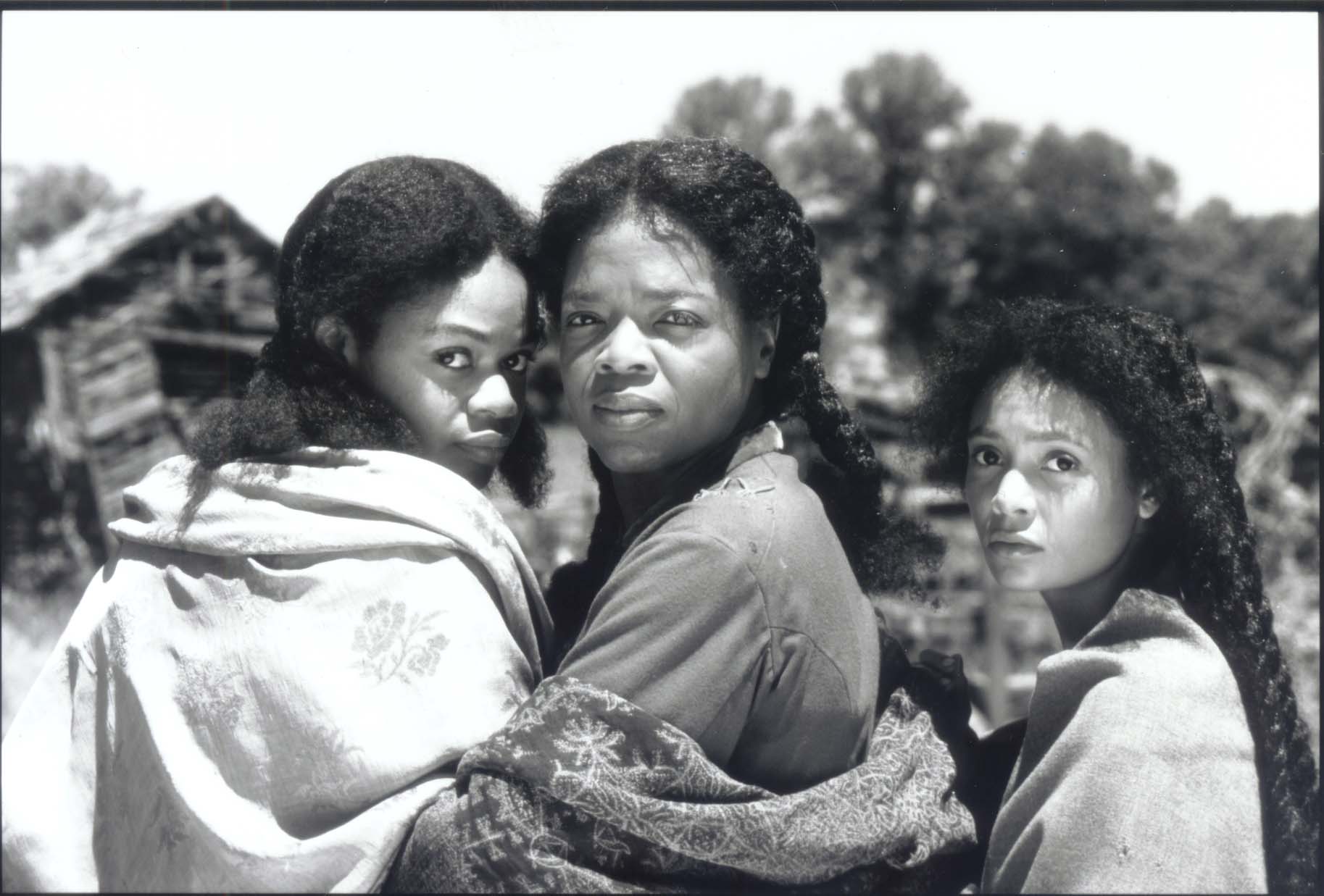
Beloved 1983

Why I chose the Psychoanalytic Lens

Agnes Nantista
20 October 2015
I chose the psychoanalytical lens because I am deeply interested in discerning the motivations behind people’s thoughts and actions and appreciate the dichotomy of people’s minds being both complex and simple. I am interested in what triggers different reactions from certain types of people, how people can have similar personalities, and what types personal history instills a person’s values. I think about these things in almost every social interaction I observe or experience.

Thursday, October 15, 2015

Psychoanalytic Lens: a Personal Rationale & Introduction


Xander Wallace
15 October 2015

Introduction

            I chose to look at Toni Morrison's Beloved through the psychoanalytic lens for reasons relating to my own character and interests. Primarily, I have an intellectual concern for the inner workings of the mind. I think that the subconscious plays a major role in the decisions we make, particularly in instantaneous circumstances. I can already infer that the main character, Sethe, carries a heavy psychological and emotional burden with her. Not only was she a slave for most of her life, but her first daughter was killed in infancy. I believe that the traumatic circumstances Sethe has undergone will pave way for a compelling psychoanalysis.

I personally am hyper analytical of my own psyche, as well as those of the people I interact with. I may find that practicing these psychoanalytic habits in an academic context will strengthen my understanding of the psyche, being that I can attach them to events and subtext that is not established in real life. By investigating the conscious and subconscious motives of the characters in Beloved, I may be able to gain a more firm grasp on my own.

---